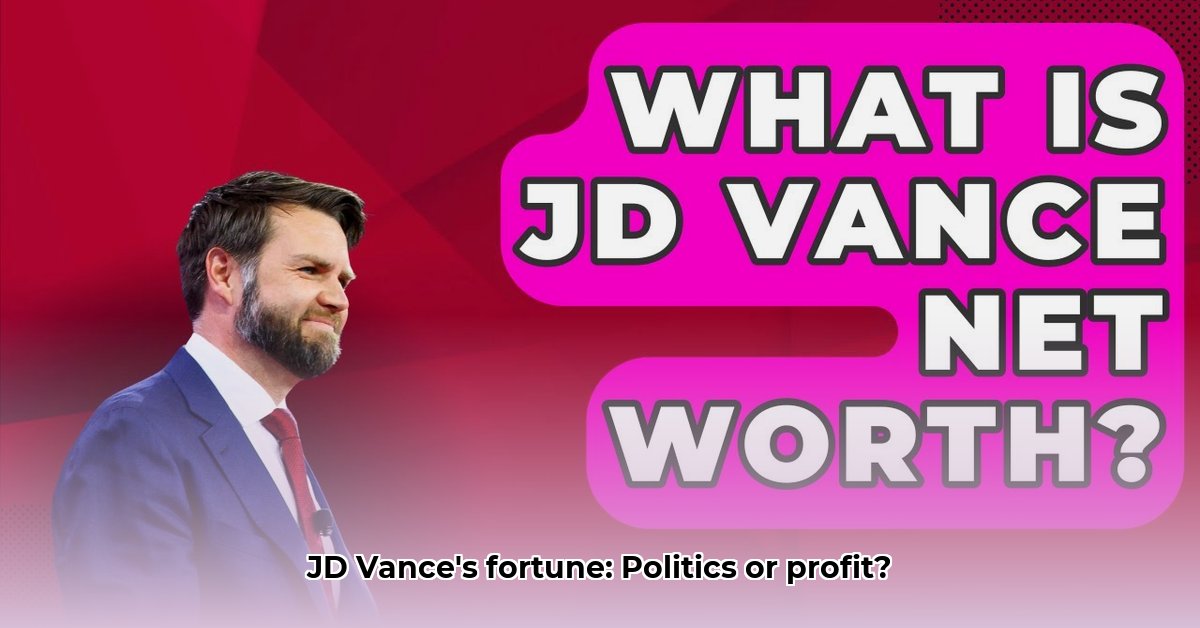
JD Vance's Financial Trajectory: From Venture Capital to the Senate
Senator JD Vance's financial history is a complex narrative interwoven with his political career. His substantial net worth, accumulated through a combination of venture capital experience and book royalties, is a subject of considerable public interest. Understanding the sources of his wealth and its potential influence on his political decisions is crucial for informed civic engagement. While precise figures remain elusive due to a lack of complete transparency, available data paints a picture of significant financial success. How this wealth has shaped his political perspective and actions warrants careful examination.
Venture Capital Ventures: A Foundation of Wealth
Before entering politics, JD Vance worked in the competitive world of venture capital. While the exact details of his financial performance in this sector are not publicly available, his involvement undoubtedly contributed significantly to his overall net worth. This experience provides a unique lens through which to understand his policy positions. Does his background in high-stakes investing lead him to prioritize policies that favor business growth and deregulation? This is a critical question that requires further investigation. For example, to what extent does his belief in limited government regulation stem from his firsthand experience in the private sector? How does his venture capital background inform his views on taxation and economic incentives?
It's important to note, however, that correlating his venture capital background with specific policy decisions requires careful analysis, avoiding simplistic assumptions of direct causation. Further research is needed to fully understand the specific impact of his background independent of other influencing factors.
The Hillbilly Elegy Phenomenon: A Literary Fortune
JD Vance's memoir, Hillbilly Elegy, achieved remarkable success, transforming him into a public figure and generating substantial royalties. This literary accomplishment significantly boosted his financial standing. The book's impact extends beyond financial gain, playing a crucial role in launching his political career. Did the success of Hillbilly Elegy provide him with the platform and resources necessary to successfully run for office? This connection needs careful consideration.
However, it’s crucial to acknowledge that the book's success, while undoubtedly influential, is only one element among many factors that contributed to his political trajectory. Other elements such as his political affiliations, personal network and the prevailing political sentiment also played crucial roles.
Transparency Concerns: The Need for Openness
A significant challenge in accurately assessing Senator Vance's net worth lies in the incomplete transparency surrounding his financial affairs. Varying reports on his wealth highlight the need for increased disclosure by elected officials. This lack of clear financial information raises concerns about potential conflicts of interest and hinders public accountability. How can we strive for a balance between protecting an individual's privacy and ensuring the public's right to know about potential conflicts of interest related to their elected officials?
The debate about financial transparency in politics is ongoing. Increased legislative efforts to mandate more comprehensive financial disclosure are increasingly relevant in the current climate of political skepticism.
The Intersection of Wealth and Political Influence
The relationship between JD Vance's considerable wealth and his political influence is complex and requires nuanced analysis. His financial standing has likely simplified fundraising for his political campaigns, granting him a competitive advantage over less wealthy candidates. This advantage could translate into broader reach and more effective communication of his political platform.
However, this financial advantage also raises concerns. Could his wealth inadvertently lead to policies that favor wealthy donors or large corporations over the interests of average citizens? This is a critical question that voters must carefully consider as they assess his political decisions.
Professor Anya Schiffrin, a prominent expert in media and journalism, states, “Transparency in political finances is essential for a healthy democracy. It allows citizens to hold their elected officials accountable and to assess any potential conflict of interest.” [Anya Schiffrin, Professor of Journalism at Columbia University]
Navigating Ethical Considerations: The Path Forward
The ethical challenges inherent in the intersection of wealth and politics are amplified by JD Vance's case. His story underscores the importance of stricter regulations regarding campaign finance and comprehensive financial disclosures from elected officials. Greater transparency is essential for fostering public trust in democratic systems. There is an ongoing discussion around reforms to campaign finance laws and strengthening ethics rules for public figures.
Conclusion: Ongoing Scrutiny and the Pursuit of Transparency
The discussion surrounding JD Vance's net worth and its potential effect on his political decisions will likely continue. Ongoing scrutiny and critical analysis are necessary to carefully examine his actions and assess the influence of his financial background on his political career. A commitment to transparency and accountability will continue to be crucial for maintaining public trust in our democratic institutions. The ongoing dialogue about campaign finance and ethical considerations is key to ensuring a politically transparent and accountable future.